A crypto portfolio tracker that only reads
Add wallets by public address and, on Starter, Standard and Premium, connect exchanges through Plaid. Sonar shows every coin you hold, what it's worth and how it has done, in one portfolio.
Updated October 27, 2026
Most crypto ends up spread out: a hardware wallet, a browser wallet on two or three networks, an exchange account, and a coin bought years ago that only comes to mind at tax time. Sonar puts all of it in one list, values it at current prices and keeps it up to date, without asking for anything that could move your money.
What it tracks
- Wallets on more than 50 networks. Ethereum and other EVM chains, Solana, Bitcoin, XRP Ledger, Cardano, TRON, Polkadot, Cosmos Hub and more. Paste an address or an ENS name; one EVM address is read across every EVM network at once.
- Coins and tokens. Native coins and the tokens in each wallet, matched to the right asset by contract address, never by guessing from a ticker. Where airdropped spam is common, tokens Sonar can't recognize or price are left out; elsewhere they're kept and listed as not recognized.
- Exchange holdings. On Starter, Standard and Premium, crypto exchanges connect through Plaid: you sign in on Plaid's screens and never create an API key.
- Everything else. Coins on exchanges Plaid doesn't offer or in cold storage can be added by hand or imported from a CSV, including full histories exported from Koinly, CoinTracker or Delta.
Stocks and ETFs can sit in the same portfolio. See the crypto and stock portfolio tracker.
How connecting works
Wallets connect by public address. Anyone can read an address; nobody can move what's in it without the private key, and Sonar never asks for one. No seed phrase, no browser extension, no signature.
Exchanges connect through Plaid on Starter, Standard and Premium. You sign in on Plaid's screens, Sonar never sees your exchange password or asks for an API key, and Plaid sends investment data only, with no way to trade or withdraw. More on the Coinbase and Kraken pages, and wallet details are on the crypto wallet tracker page.
Connected accounts resync on their own: daily on Free, every 6 hours on Starter, Standard and Premium. Prices refresh through the day.
What you see
- Net worth across every wallet and account, with the change over the last hour, day, week, month, year or all time.
- Performance that separates deposits from gains. Change includes money you moved in or out; unrealized P&L leaves it out. The performance chart is time-weighted and can be compared with Bitcoin or the S&P 500.
- Allocation by asset, by class and by account. Click an account to see only what's in it.
- Holdings with price, 24-hour change, value, profit or loss and weight, as a table or as cards.
- History. Wallet transactions come in with your balances. Import past trades and Sonar rebuilds your portfolio's value from daily closing prices, so the chart starts when you started, not when you signed up.
On Starter, every coin you hold also shows social data: mentions, engagement, sentiment and the creators driving the conversation. On Standard, coins get onchain figures too: holder counts, supply concentration, network activity and large transfers. Both cover only the assets you hold.
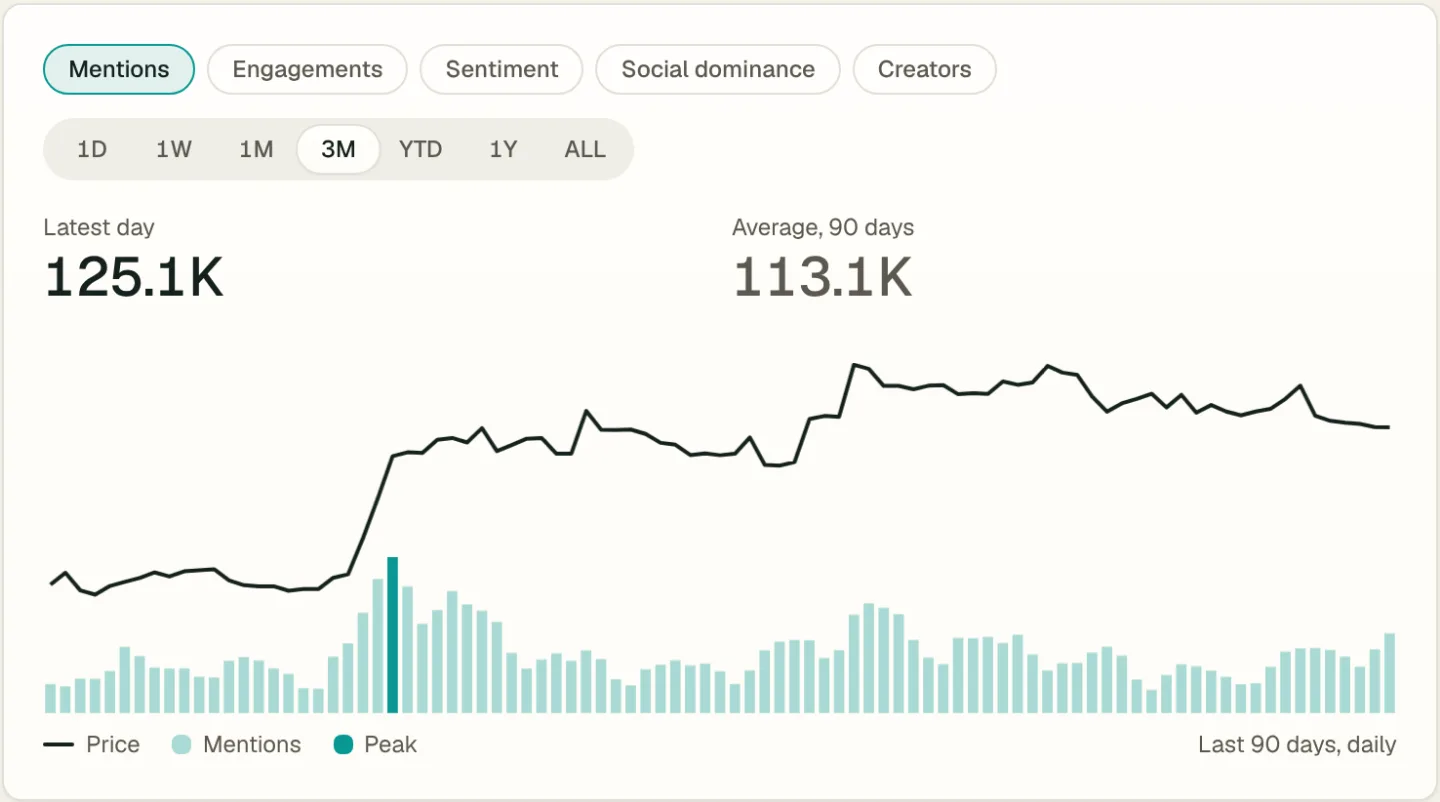
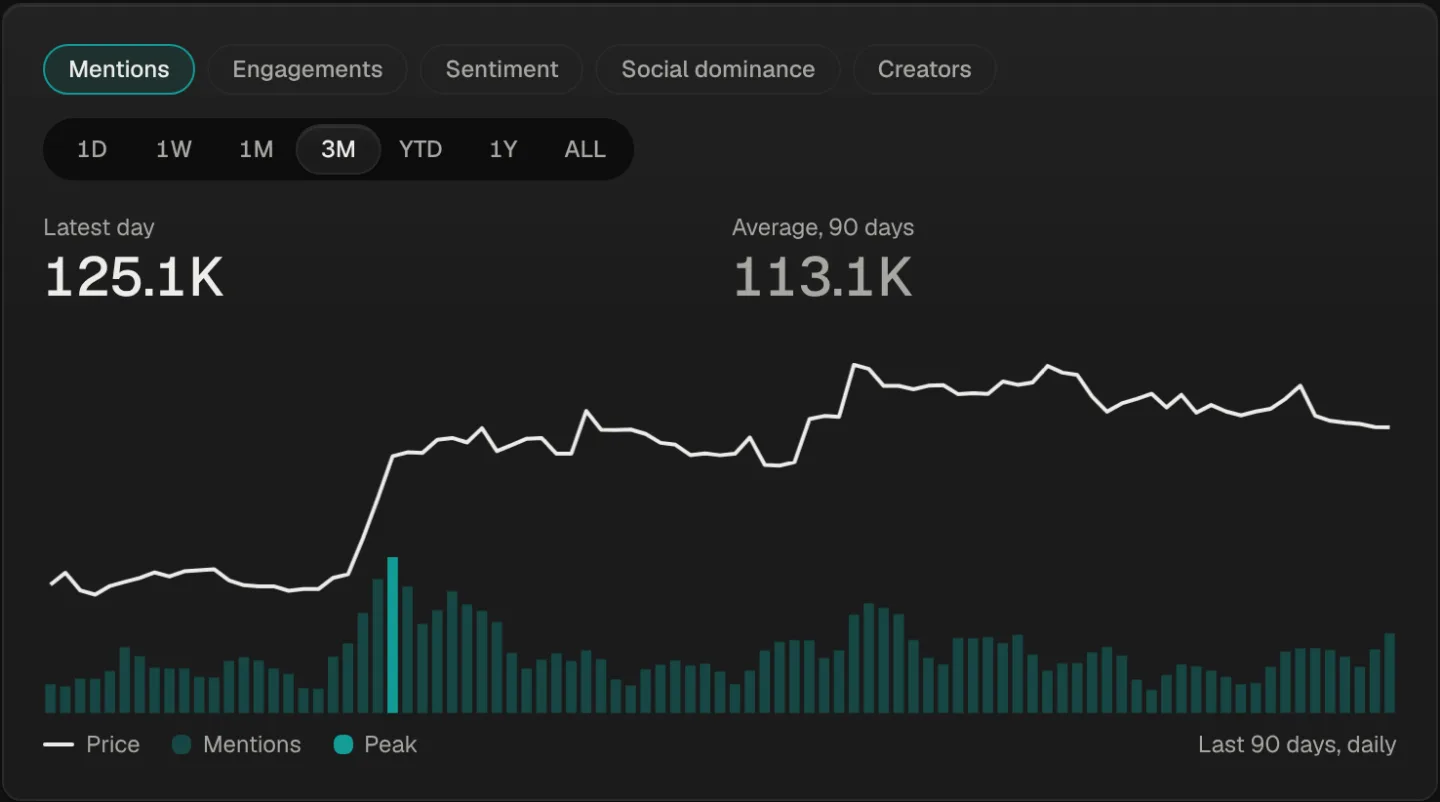
You can open a sample portfolio with live prices before signing up.
Alerts
Standard and Premium watch every coin you hold and email you when something unusual happens: a large price move, a spike in social activity or a major story. On every paid plan you can also set your own levels, such as a price above or below a number or a change over 24 hours. Alerts say what changed and over what window. They don't tell you what to do about it.
Ask Claude or ChatGPT about your crypto
Sonar has a read-only MCP connector for Claude, ChatGPT, Cursor and other MCP clients. Once it's connected, you can ask in plain language:
Which of my coins moved the most over the last 24 hours, and what are people saying about them?
How is my crypto split between my Ledger, Coinbase and Kraken accounts?
The assistant sees only what you hold and can't trade or move funds. There's more on the AI portfolio tracker page and on Developers.
Privacy and security
Sonar is read-only by design. It never asks for private keys, seed phrases or exchange API keys, and connects exchanges only through Plaid. Each portfolio is isolated at the database level, analytics run only on public pages, and your data is never sold. You can export your transactions and delete your account at any time. Details are on the security page.
Pricing in brief
- Free: the portfolio, prices, manual entry, CSV import and one connected wallet, synced daily.
- Starter, $7 a month: three connected accounts synced every 6 hours, exchanges and brokerages through Plaid, social data, custom alerts, and market data in AI tools.
- Standard, $11 a month: five connected accounts, AI alerts, onchain data, and your full portfolio in AI tools.
- Premium, $20 a month: unlimited holdings, ten connected accounts and 2,000 API requests a day.
Yearly billing saves up to 20%, and extra connected accounts are $1 a month each on paid plans. See pricing for the details.
FAQ
Is Sonar a crypto wallet?
No. It doesn't hold, send or swap crypto. It reads balances from public addresses and exchange accounts and shows them together.
Which wallets work?
Any wallet with an address on a supported network, whether it's a hardware wallet like Ledger or Trezor or a browser wallet like MetaMask or Phantom. Sonar reads the address, not the device. Bitcoin is read one address at a time.
Which exchanges can I connect?
Exchanges connect through Plaid on Starter, Standard and Premium, and which ones you can connect depends on Plaid's coverage. For an exchange that isn't offered, add those holdings by hand, or import a CSV from a tax tool such as Koinly or CoinTracker, or in Sonar's simple format. See importing a portfolio CSV.
What happens to tokens it doesn't recognize?
On most networks they stay in your portfolio, listed as not recognized, rather than being given a made-up price. Where airdropped spam is common, such as on Solana and TRON, and for EVM tokens with no market price, they're left out.
Is there a free plan?
Yes. Free covers the full portfolio, live prices, manual entry, CSV import and one connected wallet, with no time limit.
Related pages
- Crypto wallet tracker for 50+ networks, read-onlyA crypto wallet tracker that reads a public address on more than 50 networks, including Ethereum, Solana, Bitcoin, XRP Ledger and Cardano. No seed phrase.
- Coinbase portfolio tracker, read-only through PlaidTrack Coinbase next to wallets, other exchanges and stocks. Connect through Plaid on paid plans, or import a CSV. No API keys, nothing that can trade.
- How to track a crypto wallet by address, safelyTrack Ethereum, Solana, Bitcoin and other wallets with only the public address. What an address reveals, what never to share, and how to avoid scams.
- What is cost basis, and how do you track it across exchanges?Cost basis is what you paid for an investment, fees included. Learn how it is calculated, why transfers break it, and how to keep it right across accounts.
- CoinStats alternative for crypto and stocksLooking for a CoinStats alternative? Sonar tracks coins, stocks and ETFs in one portfolio, with social data on what you hold and read-only connections.