A getquin alternative with social data on every holding
getquin is a popular wealth tracker with dividends, planning and a community. Sonar tracks crypto, stocks and ETFs together and shows what the market is saying about each holding.
Updated October 27, 2026
getquin, from Berlin-based QUIN Technologies, is a wealth tracker with a built-in investor community. It connects banks and brokers, tracks dividends, plans for retirement and has a stock forum built in. Sonar overlaps on the core, one portfolio with net worth and performance, and takes a different direction around it. Here is a fair look at both.
What getquin does well
- Free broker and bank connections. getquin's Free plan includes unlimited bank and broker connections through open banking for supported brokers, plus real-time data and a net worth overview.
- Dividends. A dividend tracker and calendar show past and upcoming payments; Premium adds dividend KPIs and forecasting.
- Fund look-through. Its DeepDive X-ray shows what your funds hold.
- Planning and AI. The Wealth plan adds financial goals, a retirement plan and unlimited AI financial agents.
- Community. A stock forum where investors discuss portfolios.
- Apps. Web, iPhone and Android, in English and German.
getquin suits investors who hold stocks and ETFs at brokers it connects and care about dividends and long-term planning. Its Premium plan is €89.99 a year and Wealth €149.99 a year.
Where Sonar is different
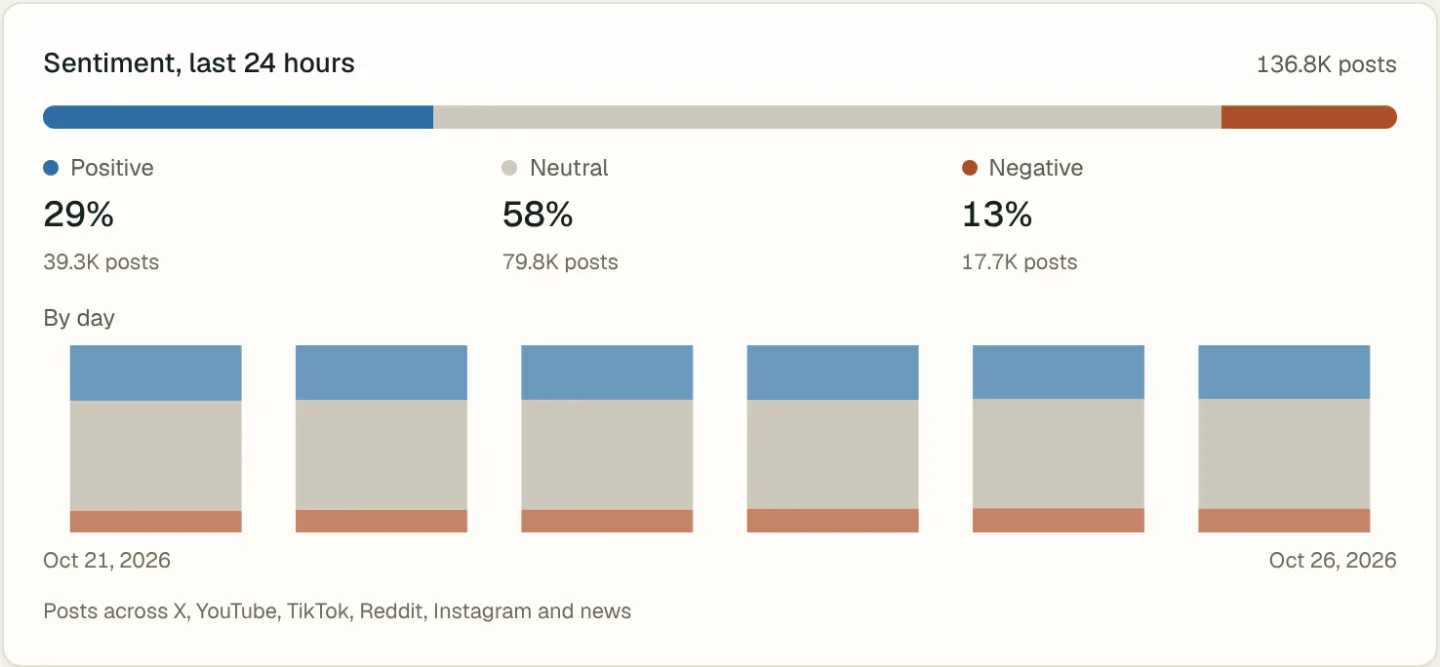
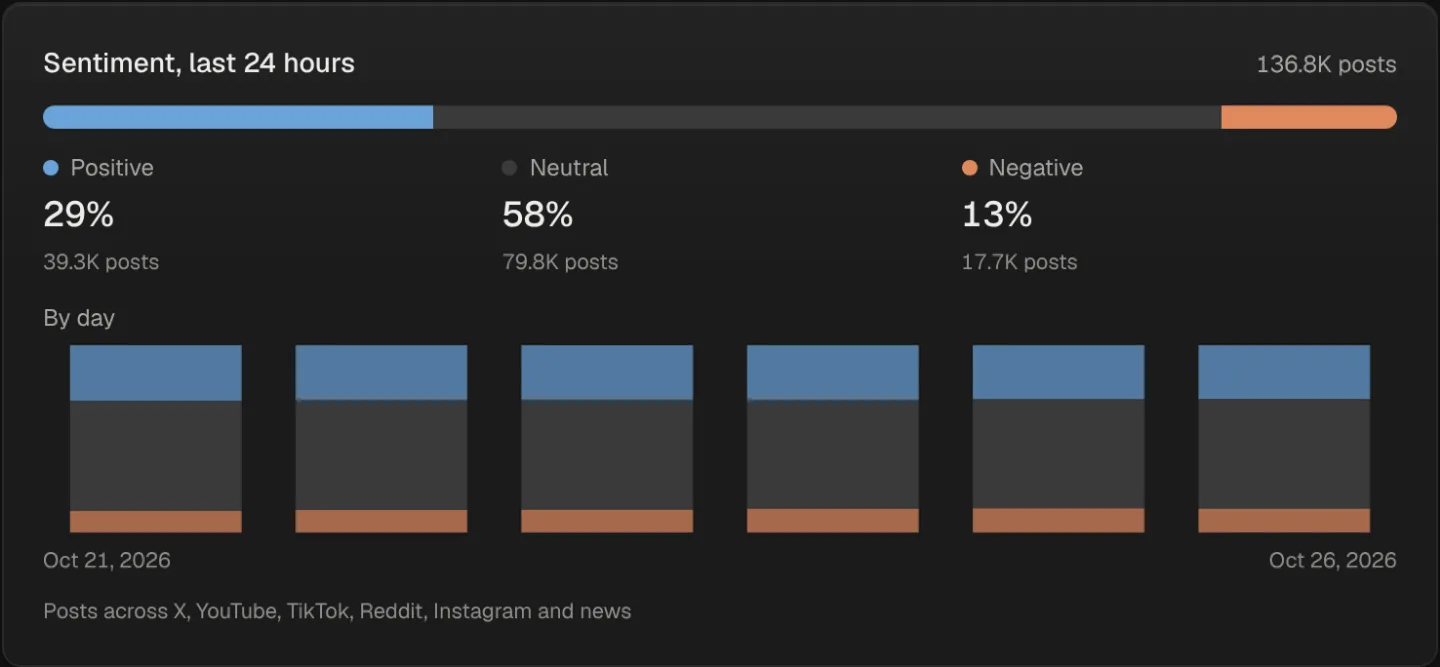
- Social data on every holding. On Starter, each stock and coin you hold shows mentions, engagement, sentiment, social dominance, discussion themes, top creators and news, drawn from the wider market conversation rather than one app's forum.
- Crypto in more places. Sonar reads wallets by public address on more than 50 networks, including Ethereum and other EVM chains, Solana, Bitcoin, XRP Ledger, Cardano, TRON and Polkadot, and on Starter, Standard and Premium connects crypto exchanges through Plaid.
- Onchain activity for your coins. On Standard, the coins you hold show holders, transfers, supply concentration and network activity.
- Your portfolio in your AI assistant. Sonar's MCP connector works with Claude and ChatGPT, so you can ask about your own holdings there. A REST API and a command-line tool use the same access.
- Read-only, and nothing sold. Sonar never asks for exchange API keys or anything that can trade or withdraw, and your data isn't sold or used for ads. See security.
getquin and Sonar compared
| getquin | Sonar | |
|---|---|---|
| Free plan | Unlimited bank and broker connections, net worth, essential analysis | Manual entry, CSV import, 1 connected wallet |
| Paid plans | Premium €89.99 a year, Wealth €149.99 a year | Starter $7, Standard $11, Premium $20 a month (or $72, $120 and $192 a year) |
| Broker connections | Open banking for supported brokers, banks included | US brokerages through Plaid on Starter, Standard and Premium; CSV import from any broker |
| Crypto | Coinbase and Binance by API, wallets by public address | Wallets on more than 50 networks; exchanges through Plaid on Starter, Standard and Premium, no API keys |
| Dividends | Tracker and calendar; forecasting on Premium | Not a dedicated feature |
| Social data on holdings | Community forum | Market-wide social data on Starter, Standard and Premium |
| AI | AI analysis and financial agents in the app | MCP connector for Claude and ChatGPT, REST API and CLI |
| Languages | English, German | Nine languages, German included |
| Apps | Web, iPhone, Android | Web; iPhone, Android and Mac apps coming soon |
When getquin is the better choice
- Your broker is European and getquin connects it. Sonar's brokerage connections cover US institutions; for a European broker you would import a CSV and update it yourself.
- Dividends and dividend forecasts are central to how you invest.
- You want retirement and goal planning in the same app.
- You want a native phone app and a community of other investors.
When Sonar fits better
- You hold crypto in self-custody wallets or on exchanges alongside your stocks and ETFs.
- You want to see the broader social conversation about each holding, not only posts inside one app.
- You want to ask Claude or ChatGPT about your portfolio, or pull it into your own tools.
- You want onchain activity for the coins you hold. See pricing.
How to switch from getquin
- Export your positions or transactions. Download a file from your broker, or copy rows from your own records into Sonar's simple format (symbol, quantity, cost basis, account).
- Import the file. Sonar matches the columns and lets you correct any of them before saving. See importing a CSV.
- Connect your crypto. Add wallet addresses, and on Starter, Standard and Premium connect exchanges through Plaid, so coins update on their own.
If a stock or fund isn't in Sonar's asset list, the position is kept and flagged as not recognized rather than dropped. Check your holdings on the Free plan before you rely on it, or look around the sample portfolio first.
Questions
Is Sonar available in German?
Yes. Sonar is available in nine languages, including German, French, Spanish and Italian, and shows values in the currency you choose, euros included.
Can Sonar connect my European broker?
Not directly today. Brokerage connections go through Plaid and cover US institutions. You can import a CSV export from any broker.
Does Sonar track dividends like getquin?
Sonar doesn't have a dividend calendar or forecasts. If dividend income is your main focus, getquin is built for it.
Is Sonar free?
Yes. Free covers your portfolio, live prices, performance and allocation, manual entry, CSV import and one connected wallet.
Which crypto wallets does Sonar support?
Wallets on more than 50 networks, read by public address: Ethereum and other EVM chains, Solana, Bitcoin, XRP Ledger, Cardano, TRON, Polkadot and more. See the crypto portfolio tracker.
getquin is a trademark of its owner. Sonar is not affiliated with getquin. Facts about getquin were checked on its website and help center on October 24, 2026, and may have changed since.
Related pages
- Portfolio tracker comparison: 12 apps side by sideCompare portfolio trackers for stocks and crypto: Kubera, Delta, Sharesight, getquin, Empower, Monarch, CoinStats, Snowball and more, with sourced facts.
- Snowball Analytics alternative for crypto and stocksSnowball Analytics is built for dividend investors. Sonar tracks crypto, stocks and ETFs together, with self-custody wallets and social data on every holding.
- Sharesight alternative for crypto and stock investorsSharesight is built for dividends and tax reports. Sonar tracks crypto, stocks and ETFs with social data on each holding. It has no tax reports.
- Stock portfolio tracker with live prices and P&LA stock portfolio tracker for stocks, ETFs and funds. Connect US brokerages read-only or import a CSV, then see performance, dividends and allocation.